

Introduction
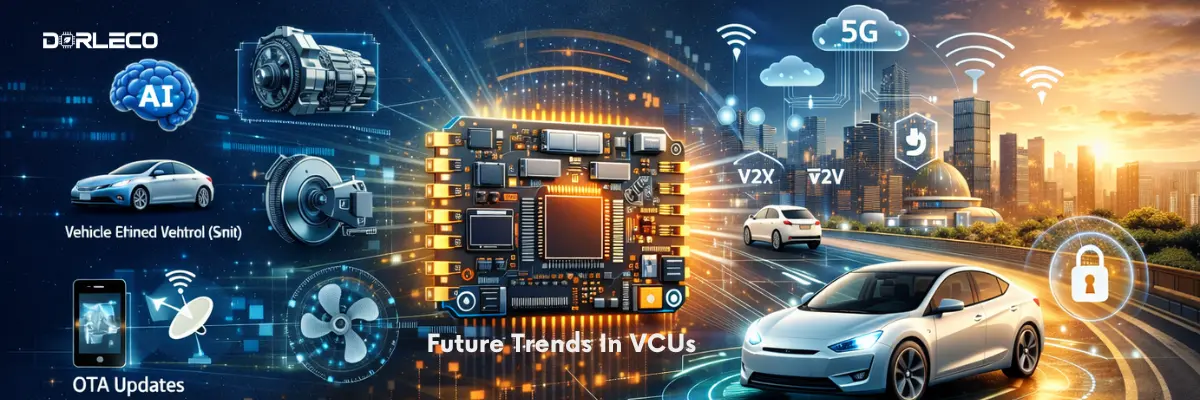
These days, cars are more than just mechanical devices; they are advanced computers on wheels. The Vehicle Control Unit (VCU), which is in charge of coordinating the complex electronics that power modern cars, is at the heart of this change.
VCUs are growing stronger, software-driven, and complex as autonomous technologies, connected automobiles, and electric vehicles (EVs) develop. The future trends influencing VCUs and how they will affect the upcoming generation of mobility are investigated in this essay.
What is a Vehicle Control Unit (VCU)?
A vehicle’s battery, motor, brakes, and powertrain are just a few of the electronic systems that are managed and coordinated by a vehicle control unit (VCU). In order to maximize performance, safety, and energy efficiency, it processes sensor data and makes sure all subsystems cooperate effectively.
Why Are VCUs Becoming the Brain of Modern Vehicles?
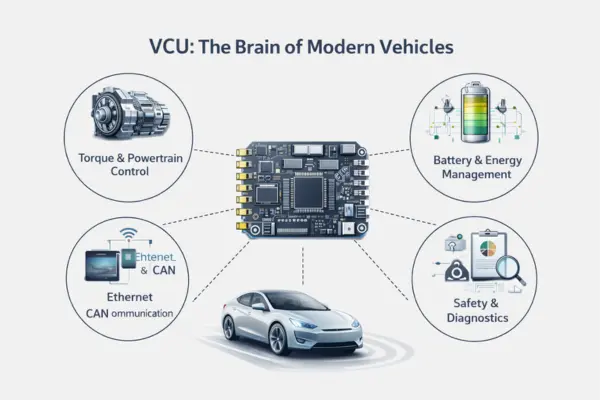
Different subsystems in conventional cars were managed by several separate ECUs. These days, the VCU serves as the central cognitive layer, managing everything from battery management to torque delivery.
- Typically, a VCU carries out a number of crucial tasks:
- Torque management and powertrain control
- Optimizing batteries and energy
- Thermal control
- Control of regenerative braking
- Ethernet or CAN communication with car subsystems
- Safety monitoring and diagnostics
Essentially, the VCU processes data from sensors and other controllers and converts it into actionable commands for the vehicle.
As vehicles become more electrified and software-defined, the role of the VCU continues to expand.
The Evolution of Vehicle Control Units
Automotive electronics have evolved dramatically over the past two decades.
Traditional Architecture
Dozens of independent ECUs
Distributed vehicle control
Limited communication bandwidth
Modern Architecture
Centralized control with powerful VCUs
Integrated software platforms
Real-time vehicle data processing
Today’s VCUs act as high-performance domain controllers capable of managing multiple vehicle functions simultaneously.
The shift toward centralized architectures is paving the way for several exciting technological advancements.
Key Future Trends in Vehicle Control Units
1. AI-Powered VCUs
Automotive software is quickly incorporating artificial intelligence as a crucial component.
Machine learning algorithms will be used in future VCUs to assess vehicle data instantly. This enables systems to:
Forecast component failures
Maximize the use of energy.
Boost your driving effectiveness.
Turn on cutting-edge driving-aid technologies.
AI-driven control systems are already being investigated to enhance vehicle system management and decision-making.
In the future, AI may allow vehicles to adapt dynamically to driver behavior and road conditions.
2. Software-Defined Vehicles (SDVs)
One of the biggest shifts in automotive technology is the rise of software-defined vehicles.
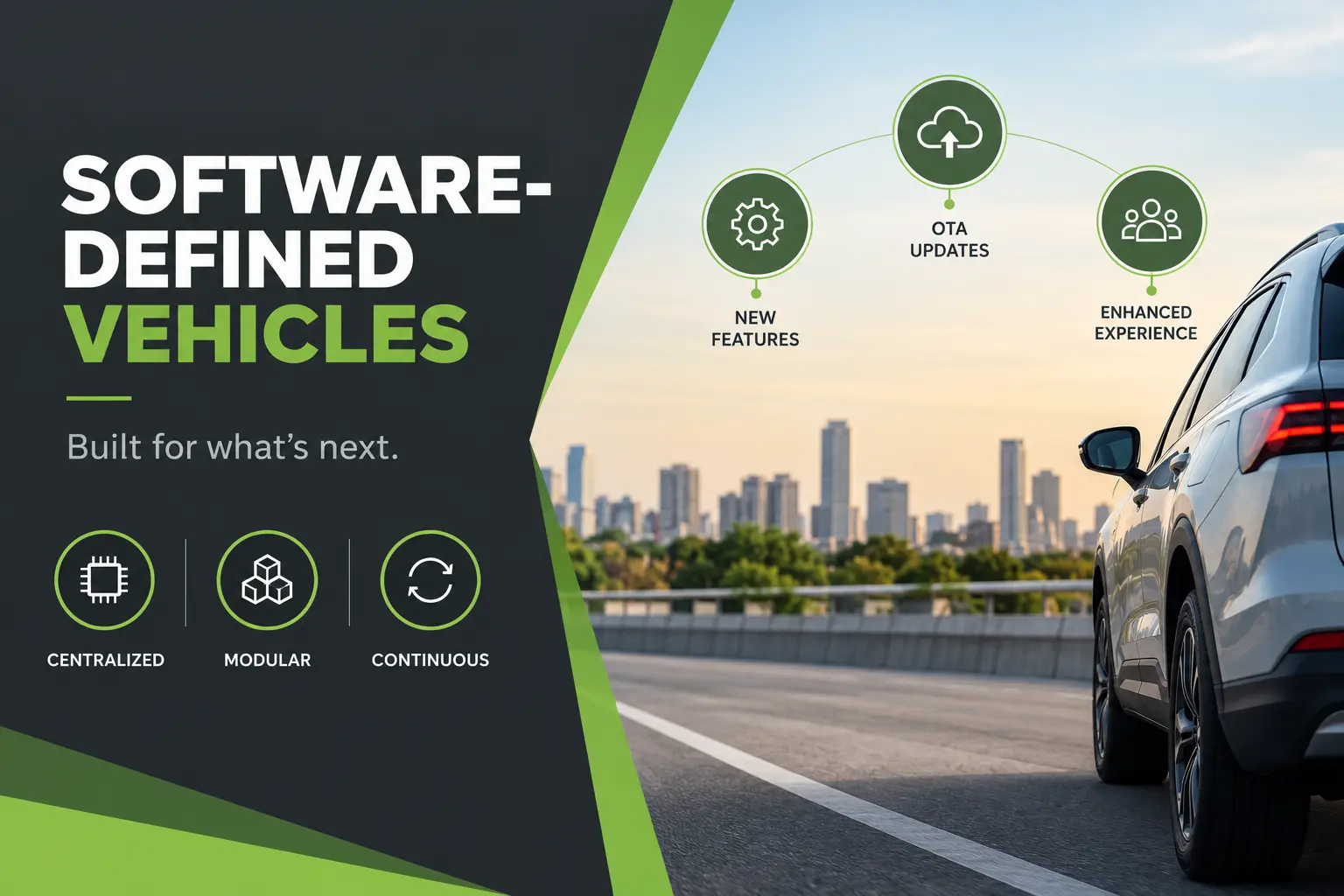
Instead of hardware determining functionality, vehicles will increasingly rely on software updates and digital services.
For VCUs, this means:
Centralized computing architectures
Modular software platforms
Continuous software upgrades
Software-defined architectures allow automakers to add new features even after a vehicle has been sold.
This dramatically changes how vehicles evolve over their lifetime.
3. Updates via the Air (OTA)
Modern EVs are starting to come equipped with OTA updates.
In the past, going to a service center was necessary to remedy a software bug. Manufacturers can now use the VCU to remotely distribute upgrades.
- OTA technology makes it possible to:
- Diagnostics from a distance
- Updates on security
- Improvements in performance
- Upgrades to features
With the increasing complexity of vehicle software, this skill is crucial.
4. Architectures for Centralized Vehicles
Consequently, centralized domain controllers are replacing hundreds of dispersed ECUs in automotive electronics.
In upcoming architectures:
- Multiple control functions will be integrated by VCUs.
- There will be less hardware complexity.
- Software development will accelerate.
Additionally, centralized control makes diagnostics easier and increases vehicle efficiency. One of the main forces behind advancement in contemporary car electronics is this architectural change.
5. Combining Autonomous Driving Systems
Therefore, autonomous cars rely on large volumes of sensor data and real-time decision-making.
VCUs will be essential in:
- Fusion of sensors
- Control of motion
- Coordination of safety systems
- Processing in real time
VCUs must manage far higher computational loads while upholding stringent safety regulations as autonomous technology advances.
6. Cloud-Linked VCUs
Therefore, future automobiles will be constantly connected to cloud platforms.
- Cloud connectivity makes it possible to:
- Fleet surveillance
- Predictive upkeep
- Analytics from vehicles to the cloud
- Diagnostics from a distance
Manufacturers are able to gather vehicle data and enhance performance through software upgrades because of this connectivity. Smart transportation ecosystems are also supported by connected VCUs.
7. Vehicle-to-Everything (V2X) Communication
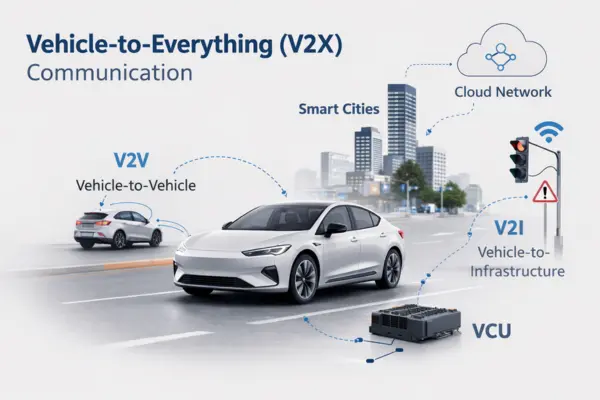
As a result, future vehicles will communicate with:
Other vehicles (V2V)
Infrastructure (V2I)
Cloud networks
Smart cities
Therefore, V2X communication improves safety, traffic efficiency, and energy management.
For example, vehicles may receive real-time traffic signals or hazard warnings through connected infrastructure.
Therefore, these capabilities rely heavily on intelligent VCU architecture.
8. Cybersecurity-Focused VCU Design
Consequently, cybersecurity becomes a major concern as cars become more connected.
- Contemporary VCUs need to have:
- Protocols for secure communication
- Updates for encrypted software
- Systems for detecting intrusions
- Safe boot procedures
Therefore, cybersecurity must be included in modern automobile electronics design.
The Role of VCUs in Electric Vehicles
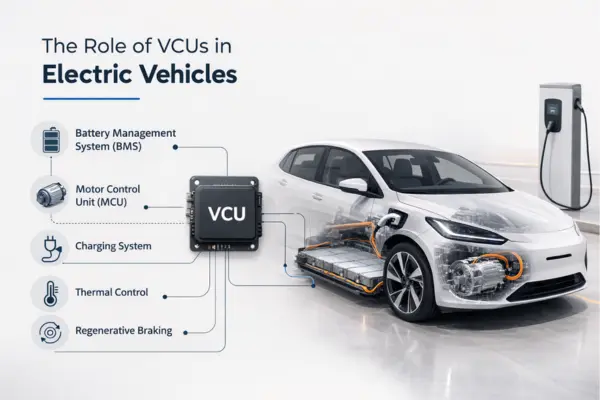
Advanced electronic control systems are therefore essential to electric cars.
Therefore, several crucial EV subsystems are coordinated by the vehicle control unit:
- System for Battery Management (BMS)
- MCU, or motor control unit
- Systems for charging
- Thermal control
- Regenerative braking
The VCU guarantees optimal vehicle performance and energy efficiency by balancing these systems. Consequently, the demand for sophisticated VCUs will rise sharply as EV adoption expands globally.
The Growing VCU Market
As a result, the global automotive industry is rapidly adopting electrification and intelligent electronics.
The vehicle control unit market is expected to grow steadily as EV production expands worldwide. Consequently, increased adoption of electric vehicles and advanced electronic architectures is a major driver of this growth.
Consequently, for engineering companies and automotive technology providers, this presents significant opportunities in the following:
Embedded software development
VCU architecture design
Automotive cybersecurity
Challenges Facing Future VCUs
Despite the exciting advancements, several challenges remain.
Increasing Software Complexity
Safety Requirements
Automotive systems must meet strict safety standards such as ISO 26262.
Real-Time Processing
VCUs must process large amounts of data while maintaining extremely low latency.
Integration Challenges
Therefore, combining hardware, software, and communication systems requires highly specialized engineering expertise. As a result, these challenges will shape the next generation of VCU development.
How Engineering Expertise Shapes the Future of VCUs
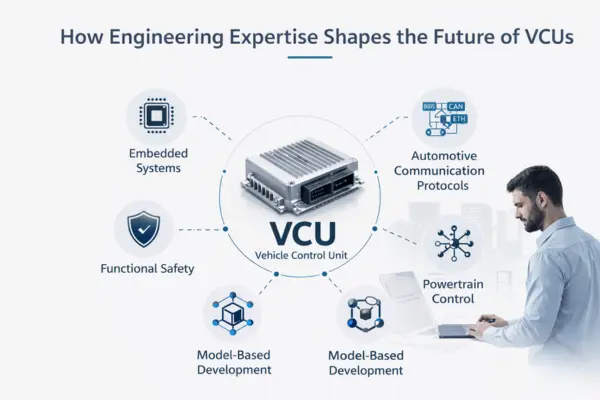
Designing high-performance VCUs requires deep expertise in multiple domains. Therefore, engineers must integrate knowledge of embedded systems and powertrain control as well as vehicle communication networks.
Embedded systems
Automotive communication protocols (CAN, LIN, Ethernet)
Functional safety
Powertrain control algorithms
Model-based development
As a result, engineering organizations that specialize in these areas help automotive manufacturers accelerate innovation and reduce development timelines.
Companies like Dorleco support OEMs and mobility innovators by providing expertise in VCU development, embedded software engineering, and EV control systems.
Conclusion
The vehicle control unit is rapidly evolving from a simple controller into the central intelligence platform of modern vehicles.
With advancements in artificial intelligence, software-defined architectures, cloud connectivity, and autonomous driving technologies, VCUs will continue to grow in complexity and capability.
Consequently, as the automotive industry moves toward electrification and intelligent mobility, the VCU will remain one of the most critical components shaping the future of transportation.